
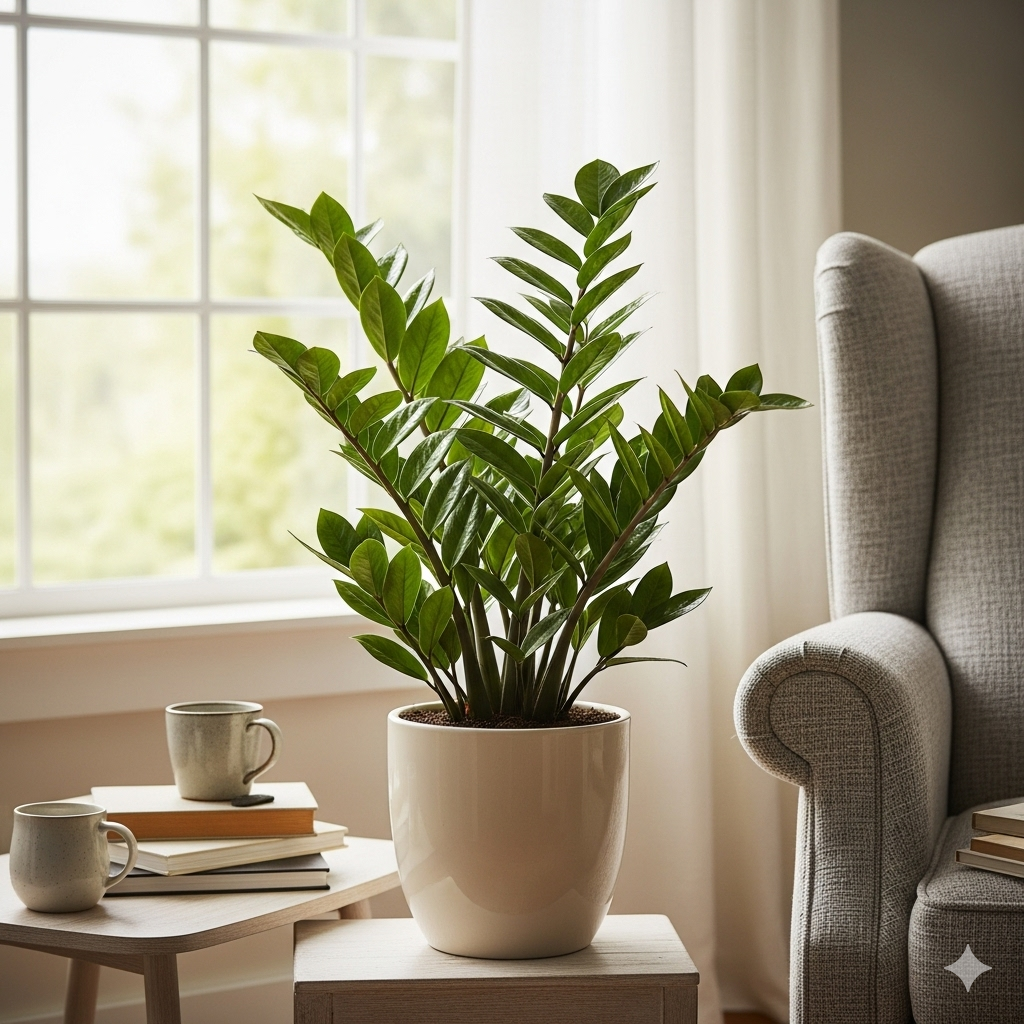
The ZZ plant (Zamioculcas zamiifolia) has earned a reputation as one of the most resilient and low-maintenance houseplants. With its glossy, dark green leaves and upright growth habit, it brings elegance to homes and offices while demanding very little in return. Its adaptability makes it particularly popular among beginners and busy plant owners. Still, like any living plant, the ZZ has preferences that influence its health and appearance. One of the most common questions plant enthusiasts ask is whether the ZZ plant does better in sun or shade indoors.
The answer lies in understanding the natural environment of the ZZ plant and translating those conditions into a home setting.
Natural Light Conditions of the ZZ Plant
The ZZ plant originates from Eastern Africa, where it grows in areas with drought-prone soils and filtered light under taller vegetation. In its native habitat, it does not receive direct, harsh sunlight all day long. Instead, it thrives under bright but diffused conditions, often shaded by surrounding plants.
This background explains why ZZ plants are remarkably tolerant of low-light conditions indoors. They have adapted to survive even when sunlight is limited, which is why they are often recommended for offices, bathrooms, and rooms with fewer windows. However, just because they can tolerate shade does not mean it is always the best option.
Does the ZZ Plant Prefer Sun or Shade?
Indoors, ZZ plants are highly flexible. They can survive in low-light spots but grow best in bright, indirect sunlight. A location near a north- or east-facing window usually works well. If placed in a south- or west-facing room, keeping the plant a few feet away from the window or using a sheer curtain will protect it from the harshest rays.
Direct sun is generally not ideal for ZZ plants. Strong afternoon sunlight can scorch the glossy leaves, leaving unattractive brown or bleached patches. On the other hand, very deep shade may cause slow growth, smaller leaves, or legginess as the plant stretches toward available light. For the healthiest results, aim for a balanced middle ground: not too dark, not too bright.
Signs of Too Much or Too Little Light
Since the ZZ plant is a survivor, it often tolerates less-than-perfect conditions for a long time before showing distress. However, it will eventually display signs that can help you adjust its placement:
-
Too much light: Yellowing leaves, dry brown spots, or faded patches that look like sunburn.
-
Too little light: Stunted growth, longer gaps between leaves, or leaves that lose their glossy shine.
-
Ideal light: Steady growth with healthy, firm, and shiny leaves.
Regularly observing your ZZ plant’s appearance is the easiest way to tell if it’s happy where it is.
Where to Place a ZZ Plant Indoors
Because of its adaptability, you have many placement options for a ZZ plant. Popular choices include living rooms, hallways, bedrooms, and workspaces. Here are some tips for choosing the best spot:
-
Bright, indirect light: Near a window with filtered sunlight is perfect.
-
Low light areas: Corners or rooms with less natural light are fine, but expect slower growth.
-
Artificial light: ZZ plants can also thrive under fluorescent or LED grow lights, making them suitable for windowless rooms.
One important note: avoid constantly moving your ZZ plant from one location to another. Like most houseplants, it takes time to adapt to new lighting conditions.
Using Grow Lights for Extra Support
If your home has limited windows, a grow light can ensure your ZZ plant gets enough brightness to stay healthy. Full-spectrum LED grow lights that mimic natural sunlight are the best option. Keep the light about one to two feet above the plant and run it for 6–8 hours a day. This approach is particularly useful during winter when daylight hours are shorter.
Additional Care Tips for Light Management
-
Rotate regularly: Turn your ZZ plant every few weeks to encourage even growth and prevent leaning.
-
Clean the leaves: Dust can block light from reaching the surface, so gently wipe the leaves with a damp cloth.
-
Transition gradually: If moving the plant from shade to brighter light, do it step by step to avoid shock.
-
Combine with proper watering: Remember, light and water go hand in hand. In low light, the plant needs less water because it grows more slowly.
Conclusion
The ZZ plant is often celebrated as a shade-tolerant houseplant, and rightly so—it can survive in conditions where many others fail. However, it does not strictly prefer deep shade. Instead, it thrives best in bright, indirect light while tolerating lower-light conditions with slower growth. Direct sun should be avoided to protect its attractive foliage. By choosing the right spot, whether near a softly lit window or supported with a grow light, you can enjoy a vibrant, glossy ZZ plant that continues to enhance your indoor space with minimal effort.