
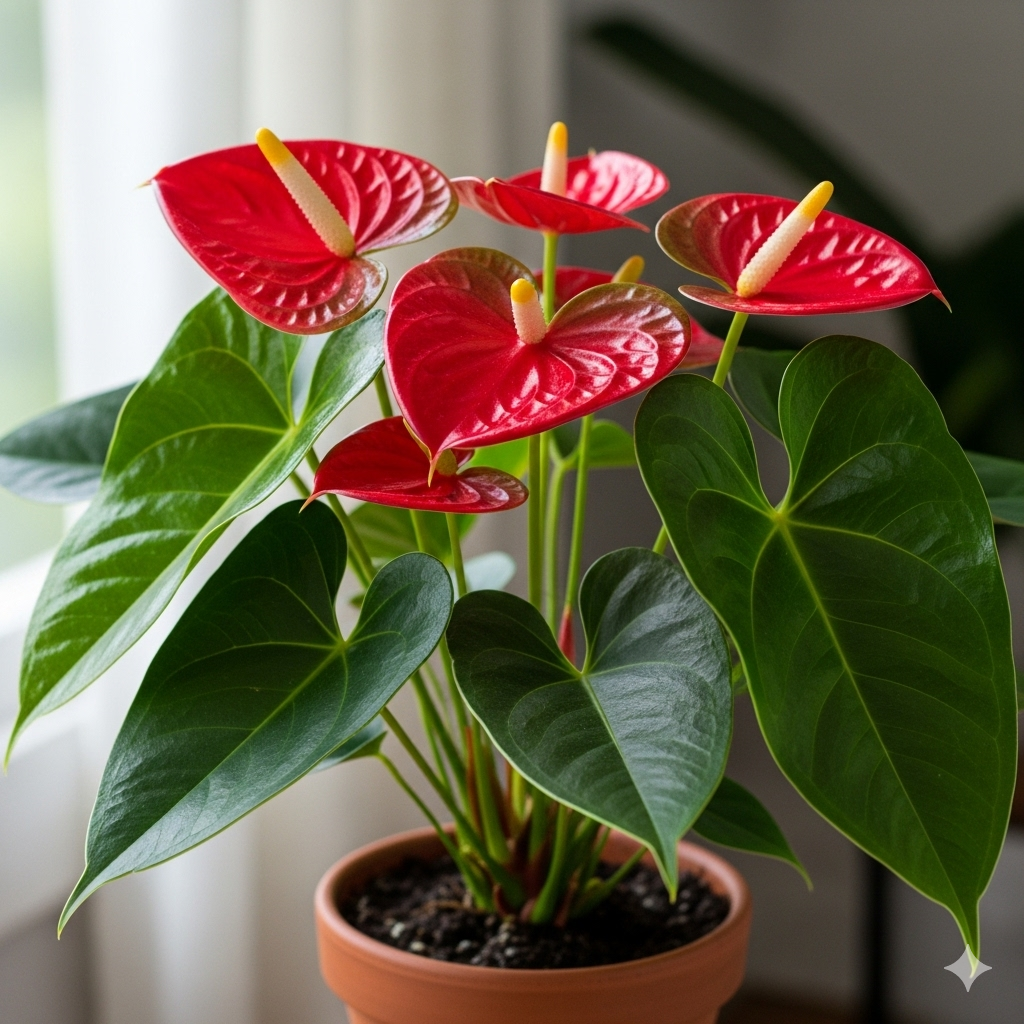
Anthuriums, often called “flamingo flowers” or “laceleaf plants,” are prized for their glossy green leaves and vibrant, heart-shaped blooms that brighten any indoor space. Their striking appearance and long-lasting flowers make them a popular choice for both homes and offices. However, one of the most common questions plant enthusiasts ask is whether anthuriums can survive in low-light rooms.
The answer is yes, anthuriums can tolerate lower light conditions, but their health and flowering potential are significantly affected by the amount of light they receive. Let’s explore how these plants respond to different light levels, what low light really means, and how you can keep an anthurium thriving even in dimmer rooms.
Natural Habitat and Light Preferences
Anthuriums are native to the tropical rainforests of Central and South America. In the wild, they grow under the canopy of taller trees, where they receive dappled sunlight filtered through layers of leaves. This natural setting explains why anthuriums prefer bright, indirect light indoors rather than harsh direct sun.
When grown in the right conditions, anthuriums produce lush foliage and vivid spathes (the colorful, waxy structures often mistaken for flowers). Too much or too little light, however, can affect both their growth and their ability to bloom.
What Counts as Low Light?
To understand whether your anthurium can adapt, it’s important to define low light. In houseplant terms, low light doesn’t mean complete darkness—it refers to spaces where natural light is minimal, such as:
-
Rooms with north-facing windows that let in limited sunlight.
-
Areas several feet away from a window where brightness is reduced.
-
Hallways, bathrooms, or offices with small windows or shaded glass.
Truly dark corners with no natural light at all are unsuitable unless you provide supplemental artificial lighting.
How Anthuriums React to Low Light
Anthuriums are fairly adaptable, but prolonged low light affects them in noticeable ways:
-
Reduced flowering: Bright light is necessary to encourage blooms. In low light, the plant may stop producing flowers altogether.
-
Slower growth: Leaves may develop more slowly, and the plant will appear less full.
-
Duller foliage: The glossy sheen of the leaves may fade, and new leaves may be smaller.
-
Paler spathes: If flowers do appear, their color may be less vibrant.
While the plant can survive in these conditions, it won’t showcase its best qualities.
The Ideal Light for Anthuriums
For healthy growth and abundant blooms, anthuriums do best in bright, indirect light. An east-facing window provides gentle morning sun, while a north-facing window offers steady, soft light. South- and west-facing windows can also work if the plant is placed a few feet back or shielded by sheer curtains to avoid harsh rays.
With enough light, anthuriums reward you with frequent flowering and deep green foliage, making them a stunning centerpiece in any room.
Tips for Growing Anthuriums in Low Light
If your home or office has limited natural light, there are still ways to help your anthurium thrive:
-
Supplement with grow lights
A full-spectrum LED grow light can make up for a lack of natural brightness. Position it 12–18 inches above the plant and leave it on for 8–10 hours a day. -
Choose the brightest available spot
Even in dim rooms, place your anthurium as close as possible to a window or light source. -
Rotate regularly
Turn the plant every few weeks to ensure even exposure and prevent lopsided growth. -
Adjust watering habits
In low light, the plant uses less energy and water. Overwatering is a common problem in these conditions, so always allow the top layer of soil to dry slightly before watering again. -
Keep leaves clean
Wiping dust from the broad leaves helps maximize the plant’s ability to absorb whatever light is available.
When Low Light Isn’t Enough
If your room receives very little to no natural light, your anthurium is unlikely to bloom without assistance. In such cases, consistent use of grow lights is essential if you want flowers. Alternatively, you may want to consider shade-tolerant plants like ZZ plants, snake plants, or pothos, which are better suited to dark conditions.
Final Thoughts
Anthuriums are adaptable plants that can survive in low-light rooms, but they truly flourish in bright, indirect light. While they may live in dim spaces, their growth slows, their leaves become less vibrant, and flowers may stop appearing. If you want your anthurium to showcase its glossy foliage and stunning blooms, positioning it in the brightest possible spot—or supplementing with artificial light—is the best solution.
With the right care and lighting adjustments, your anthurium can remain a striking, long-lived plant that brings beauty and elegance to any indoor setting.